

In 2010, nutrition professor Dr. Mark Haub did something that sounded like he was responding to a bet.
He decided to lose weight eating mostly junk food.
Haub wanted to prove calorie was still king in weight-loss. So, his “Twinkie Diet” consisted mostly of Twinkies, licorice, ho-hos… basically anything you can find in the junk-food section of a gas station.
And he lost almost 30 pounds.
How he did it teaches us an important lesson of weight-loss.
What Dr. Mark Haub actually did
Haub was a nutrition professor at Kansas State University. He began the experiment in late August 2010 and deliberately restricted his calories to about 1,800 per day while keeping his physical activity about the same. He did eat snack cakes and other convenience-store foods, but he was not living on Twinkies alone.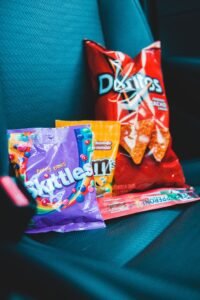 Contemporary reporting said his diet also included things like whole milk, canned or frozen vegetables, a multivitamin, and a protein supplement. (source)
That detail matters.
Because the “Twinkie Diet” was never really a Twinkie diet. It was a calorie-restricted diet wrapped in a ridiculous headline. Haub’s point was not that junk food was healthy. His point was that if calorie intake is low enough, body weight can go down even when food quality is poor.
And yes, the results were dramatic.
Over roughly 10 weeks, Haub lost about 27 pounds. Reporting on the experiment also noted that his body mass index dropped from 28.8 to 24.9, his triglycerides fell by 39%, his LDL cholesterol dropped by about 20%, and his HDL cholesterol increased by about 20%.
That shocked people. It should not have.
When someone loses a meaningful amount of body weight, health markers often improve, at least in the short-term. That does not automatically mean the diet itself is ideal. It means losing excess body fat can improve your health even if your food choices aren’t ideal. (source)
In short: excess weight itself is unhealthy. If you want to be healthy, losing weight is an important step.
The real lesson: fat loss runs on energy balance
Here is the part people wanted to skip.
The real lesson of the Twinkie Diet is that fat loss is driven by energy balance. When calorie intake stays below calorie expenditure over time, body weight goes down. That’s a law! (source)
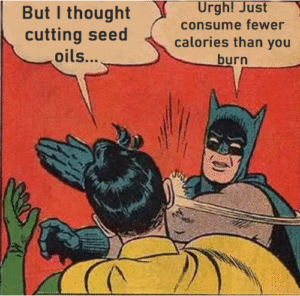 That does not make calories the only thing that matters in nutrition. But it does prove the point that calories are the only thing that matter in moving the number on the scale. And: his health markers prove moving numbers on the scale can dramatically improve health.
That is what made Haub’s experiment so interesting.
It stripped away a lot of nutrition theater. No mystical detox. No magic food-combining rule. No carb curfew. No clean-eating halo. Just a simple, uncomfortable truth: body fat does not care whether the calorie arrived wearing a kale costume or a powdered-sugar tuxedo. If enough calories are cut, fat loss can happen.
This is where people usually overcorrect.
They hear “calories matter” and translate it into “food quality does not matter.” That is not what Haub proved, and it is not what the science says.
What the Twinkie Diet did not prove
Haub did not prove that all diets are equally healthy.
He did not prove that Twinkies are a smart long-term fat-loss food.
He did not prove that protein, fiber, food quality, appetite, and adherence are meaningless.
He proved something narrower, but still important: you can lose body fat on a junk-food-heavy diet if calories are controlled. That is very different from saying junk food is the best way to lose fat.
In fact, Haub himself was careful about that distinction. ABC’s reporting quoted him saying the experiment was not an attempt to create an optimal diet, and that he would not advise people to try it because the long-term effects of that kind of eating were still unknown.
That is a crucial point.
A diet can work for short-term weight loss and still be a terrible blueprint for real life.
Why food quality still matters
Calories determine whether weight tends to go up or down. Food quality affects how hard or easy that process feels.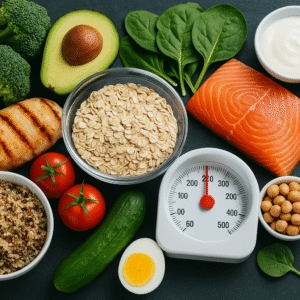
That is a huge difference.
A calorie deficit built on lean protein, fruit, potatoes, yogurt, vegetables, beans, and other filling foods usually feels very different from a calorie deficit built on snack cakes and chips. One tends to support fullness, stable energy, better nutrient intake, and better gym performance. The other tends to leave people hungry, undernourished, and one stressful afternoon away from inhaling half the pantry. (source)
Modern research helps explain why.
In a tightly controlled NIH study, adults eating an ultra-processed diet consumed about 500 more calories per day than when they ate an unprocessed diet, and they gained weight during the ultra-processed phase. The meals were designed to be matched for many key nutrients, but the ultra-processed diet still led to overeating. That matters because it shows why “just eat less” is easier said than done when the foods you eat make overeating feel like a hobby.
That does not mean ultra-processed foods break physics.
It means they often make calorie control harder.
And that is why the Twinkie Diet is better understood as a proof of concept than a real-world strategy. Yes, you can lose fat on junk food so long as you’re in a calorie deficit. But most people will lose fat more successfully when they build their diet around foods that help them stay full and keep calories in check without feeling like they are fighting for their life by 3 p.m.
Protein and fiber are the quiet heroes
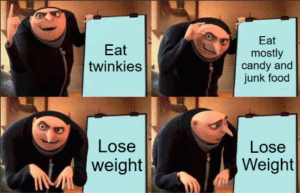 If the Twinkie Diet showed that calories are the engine, protein and fiber help with the steering.
Protein tends to be more satiating than carbohydrate or fat and may help reduce overall energy intake in free-living conditions. Fiber can also improve satiety and, in some cases, reduce later food intake. That is one reason high-protein, high-fiber diets are so common in successful fat-loss plans: not because they bypass the calorie equation, but because they help people stick to it.
That is the practical takeaway most people need.
Not “Twinkies work.”
Not “calories are all that matter.”
But this: fat loss requires a calorie deficit, and smarter food choices make that deficit much easier to maintain.
That is a much less exciting headline than “professor lives on snack cakes,” but it happens to be more useful.
So what should you learn from the Twinkie Diet?
You do not need a perfect diet to lose fat.
You do not need to eat like a monk.
You do not need to pretend that one cookie ruined your metabolism.
But you do need to respect energy balance. And if you want the process to be sustainable, enjoyable, and healthier, you should probably build that calorie deficit with foods that actually help you stay full.
Haub’s experiment made one truth painfully clear: the body will lose weight when calories are low enough, even if the menu is ugly. The better lesson is what comes next: just because something can work does not mean it is the smartest way to do it.
Twinkies proved the rule.
They did not become the recommendation.

Lessons learned
- Fat loss runs on energy balance.
If calorie intake stays below calorie expenditure over time, body fat can come down. - Food quality still matters.
Calories drive fat loss, but food quality affects fullness, nutrition, energy, and long-term sustainability. - Ultra-processed foods often make overeating easier.
That does not make them magical. It makes them harder to manage. - Protein and fiber make a calorie deficit easier to live with.
They help with satiety, which makes adherence easier. - A clever experiment is not a lifestyle blueprint.
Haub proved a principle, not a meal plan.
References
ABC News. Nutritionist Does Twinkie and Steak Diet, Loses Weight. Link.
CBS News. Twinkie Diet for Weight Loss: Is Professor Haub on to Something? Link.
TIME. Is Counting Calories Good for Weight Loss? Link.
Los Angeles Times. A Twinkie diet? It comes down to calories. Link.
Hall KD et al. Energy balance and its components: implications for body weight regulation. Link.
Hall KD et al. Ultra-Processed Diets Cause Excess Calorie Intake and Weight Gain. Link.
NIH Clinical Center. First randomized, controlled study finds ultra-processed foods cause overeating and weight gain. Link.
Paddon-Jones D et al. Protein, weight management, and satiety. Link.
Clark MJ, Slavin JL. The effect of fiber on satiety and food intake: a systematic review. Link.