

She Was Eating 1,150 Calories a Day… and Still Gaining Weight
Jill* called me one September night, frustrated and ready to give up.
“I haven’t lost a pound,” she said through the camera. “My husband says I barely eat. I’ve been in a calorie deficit for months and somehow I’ve gained three pounds. Something’s wrong with my body.”
As a weight-loss coach who’s lost 100 pounds myself, I knew it was physically impossible to eat in a true calorie deficit and not lose weight. But I could sense that wasn’t really the point she was making.
I asked Jill to track her eating very precisely for one week and make sure she was weighing everything on her food scale. Her average intake came out to 1,150 calories per day.
The Peanut Butter Problem
The next week, her husband joined our call.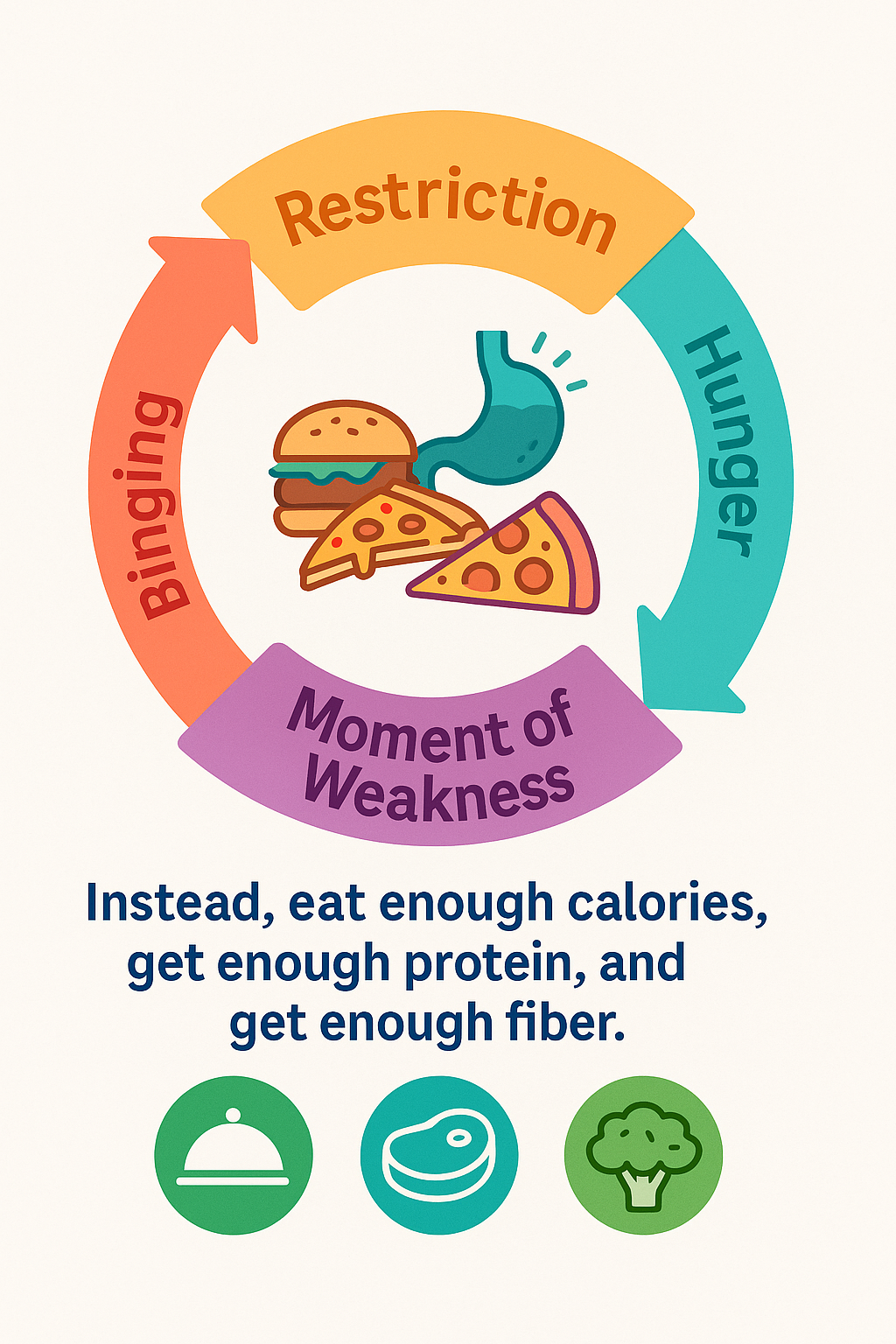
“She’s not logging everything,” he said gently. “She eats spoonfuls of peanut butter late at night.”
Jill looked embarrassed. “I get headaches and feel low on energy,” she said. “So I grab a spoonful of peanut butter for the protein. It’s not that many calories.”
When we looked closer, she was eating five heaping spoonfuls a day — almost 900 extra calories — and the peanut butter she was eating wasn’t even a great protein source.
“There’s your problem,” I said.
“That I’m eating too much peanut butter?” she asked.
“No,” I smiled. “That you’re restricting yourself too much.”
Your Body Needs Nutrients
Jill’s story is common among people who ask, “Why am I not losing weight even though I’m eating so little?”
For the record, she’s now down 33 pounds and says she finally feels energetic again.
Here’s the truth: people want to lose weight so badly that they often undereat. Then, when the body’s running on empty, it sends desperate hunger signals, and eventually, you binge.
The solution isn’t to restrict harder. It’s to nourish better.
I helped Jill build a plan that made her body feel nourished, energized, and full. The weight finally started coming off.
The Plan
 I raised her target calories to 1,550 per day. Still a deficit, but one her body could sustain. Then I gave her three goals:
- Eat enough protein: at least 120 grams per day.
We found a high-protein peanut butter that satisfied her cravings and fit her goals. - Get around 30 grams of fiber daily.
She added berries to her Greek yogurt and used a psyllium husk supplement to close the gap. - Stop over-restricting calories.
Her body needed enough energy to function so she wouldn’t feel lethargic and resort to binging.
Once she started fueling her body instead of starving it, everything changed. She lost 33 pounds, felt more energized, and said for the first time, she didn’t feel “on a diet.”
What About You?
Have you felt like Jill: eating “nothing,” yet always tired and ending up binging?
If so, here’s your answer to why you’re not losing weight in a calorie deficit: your body needs nutrients, not starvation.
Follow Jill’s pattern:
✅ Eat enough calories. Use our free calorie calculator to find your perfect target.
✅ Get enough protein.
✅ Aim for 30 grams of fiber each day.
Do those three things consistently, and you’ll feel full, happy, and finally in control of your weight-loss journey.
If you want more guidance like this, check out our free Weight-Loss Guide for tools, examples, and meal ideas to help you lose fat and feel great doing it.